Table of Contents
Introduction

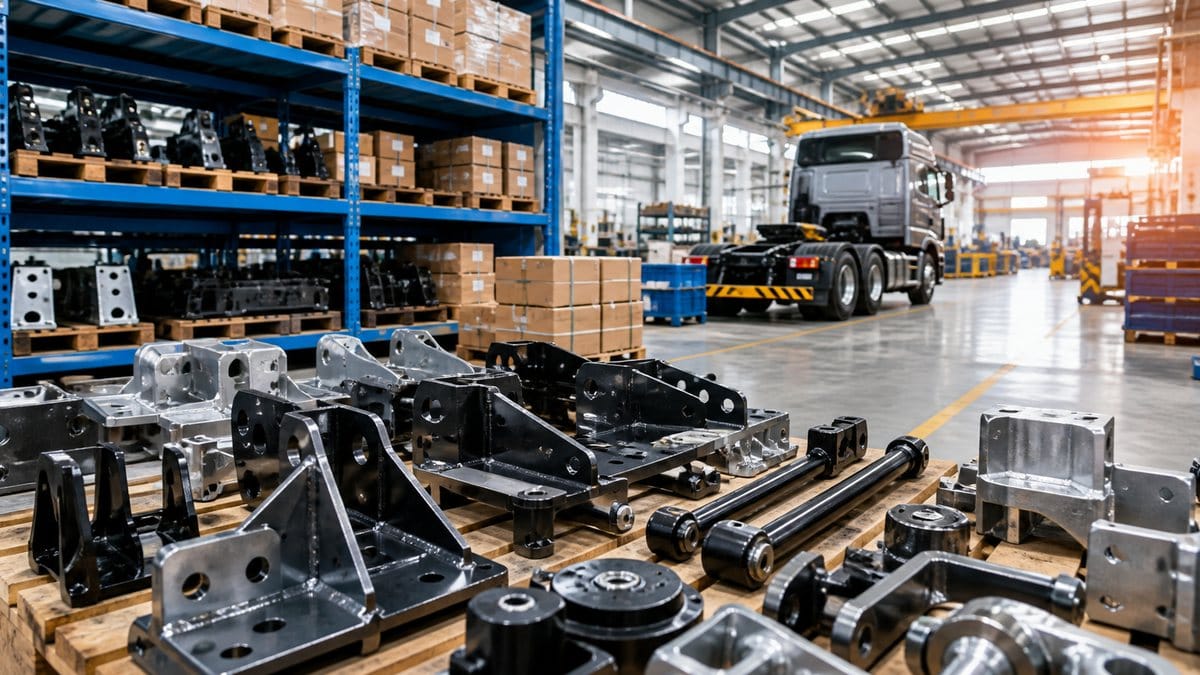
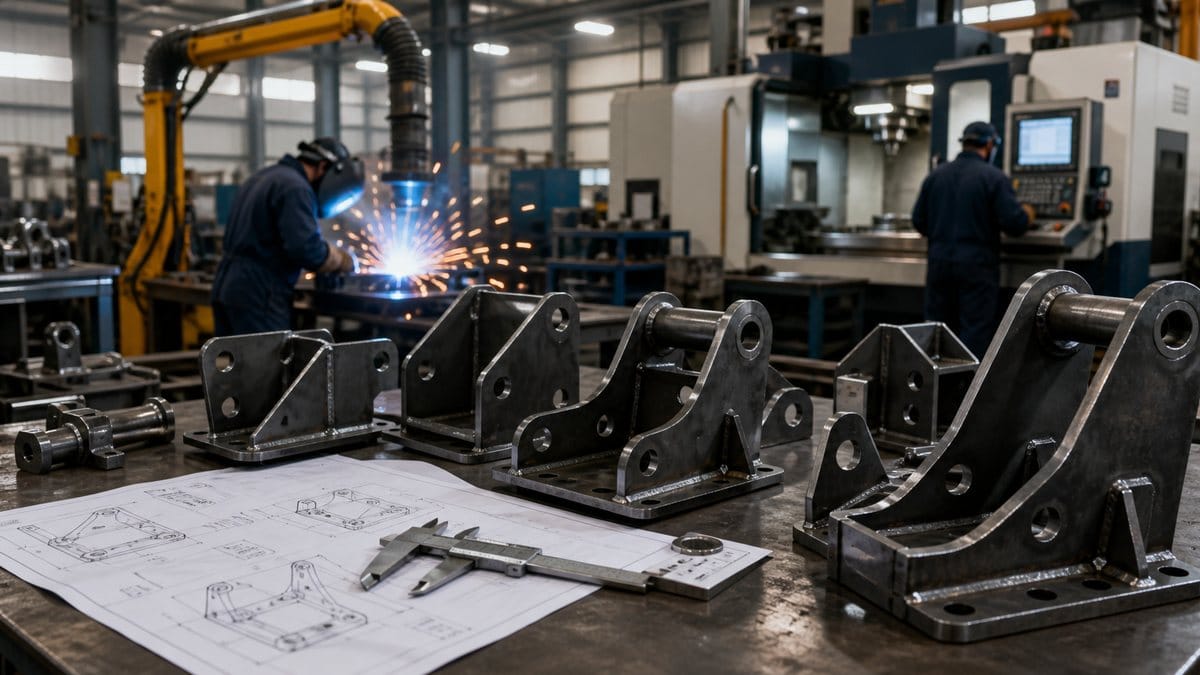
Heavy trucks depend on a large number of structural, body, suspension, and mounting components to keep different vehicle systems correctly positioned during long-term operation. While major assemblies often receive most of the attention, brackets, cross beams, stabilizer bars, protective structures, and cab-related mounting parts also play important roles in vehicle reliability.
Selecting Heavy Truck Parts therefore requires more than identifying a general component name. Vehicle brand, model, installation position, original reference number, material, dimensions, and surrounding assemblies can all affect whether a part fits correctly.
For commercial vehicles such as Sinotruk, FAW Jiefang, and Shaanxi Auto trucks, understanding these differences is particularly important when replacing damaged structural or mounting components. This guide introduces several important heavy truck part categories and explains what should be checked when identifying suitable replacements.
What Are Heavy Truck Parts?
Heavy Truck Parts cover the components used throughout a commercial truck’s chassis, cab, body, suspension, lighting support structures, and other mechanical assemblies.
Some parts are large structural assemblies, while others are smaller components responsible for supporting, positioning, connecting, or reinforcing surrounding systems.
A practical classification can include:
| Component Type | Typical Function |
|---|---|
| Fender brackets | Support and position fender assemblies |
| Headlight brackets | Hold lighting assemblies in the correct position |
| Cross beams | Connect and reinforce structural sections |
| Hydraulic lock brackets | Support cab locking or tilting mechanisms |
| Stabilizer bars | Help control movement within applicable suspension systems |
| Cab suspension brackets | Connect parts of the cab suspension structure |
| Protective bars | Provide structural protection in designated vehicle areas |
| Aluminum structural parts | Reduce component weight while maintaining required structural geometry |
Because these components interact with surrounding truck structures, correct fitment is essential.
Leiying’s Heavy Truck Parts product range includes several of these structural and mounting component categories for commercial truck applications.
Fender Brackets
Fender brackets are used to support fenders and related body structures around the wheel area.
Although they may appear relatively simple, the geometry of a fender bracket is closely related to the body design of the truck. Different vehicle models can use different mounting-hole positions, bends, reinforcement areas, and left- or right-side configurations.
When checking a fender bracket, several details should be confirmed:
vehicle model, installation side, mounting-hole spacing, bracket shape, material, and surrounding body components.
A damaged fender bracket may also become bent during an impact. For this reason, dimensions should ideally be taken from undamaged mounting points rather than from a visibly deformed section.
For trucks that use different cab or body generations, model identification is especially important because two brackets with a similar appearance may still use different connection points.
Headlight Brackets
Headlight brackets position lighting assemblies relative to the cab or surrounding front body structure.
Accurate positioning matters because even small dimensional differences can affect lamp alignment and the fit of nearby panels.
A replacement headlight bracket should therefore match more than the overall outline of the original component.
Important factors include:
- left or right installation
- truck model
- mounting-hole pattern
- connection points
- bracket thickness
- surrounding body geometry
Headlight brackets are a good example of why heavy truck components should not be identified only by photographs.
Two parts may look almost identical when placed side by side, but a different bend angle or mounting-hole position can make one unsuitable for the required vehicle configuration.
Cross Beams and Structural Connections
Cross beams are structural components that connect sections of the truck chassis or related assemblies.
Their role can vary according to vehicle design, but they generally contribute to the positioning and reinforcement of surrounding structures.
When identifying a cross beam, technicians should check:
overall length, connection points, mounting holes, structural profile, material thickness, and applicable vehicle platform.
Because cross beams interact directly with surrounding structural components, dimensional accuracy is particularly important.
A part that is slightly different in length or hole position may create installation difficulties further along the assembly.
For this reason, cross beams should normally be matched by vehicle application and technical dimensions rather than by a general product description alone.
Hydraulic Lock Brackets
Many heavy trucks use tilting cab structures that provide access to components beneath the cab. Hydraulic and mechanical locking systems help control this structure during operation.
Hydraulic lock brackets support parts of this system and must fit correctly with the cab, locking mechanism, and surrounding mounting structure.
When identifying a hydraulic lock bracket, check:
truck series, installation location, left or right configuration where applicable, original component number, mounting dimensions, and surrounding connections.
The bracket’s geometry can affect how connected components sit relative to one another.
For this reason, technicians should avoid assuming that hydraulic lock brackets from different truck models are interchangeable simply because their external shapes are similar.
Cab Suspension Brackets
Cab suspension systems help isolate the cab from vibration and movement generated by the chassis and road surface.
Brackets within this system connect suspension components to the cab or vehicle structure.
These components experience repeated loading during vehicle operation, making their dimensions, material, and mounting geometry particularly important.
When evaluating a cab suspension bracket, attention should be given to:
- upper or lower position
- left or right side
- mounting-hole spacing
- connected suspension components
- bracket geometry
- material
- truck model
If a bracket has been damaged or deformed, the surrounding mounting points should also be inspected before installation of a replacement component.
Replacing the bracket alone may not correct the assembly if another connected part has also moved from its intended position.
Stabilizer Bars
Stabilizer bars are used in vehicle suspension systems to help control movement and support stable handling characteristics.
Their dimensions and mounting configuration depend on the vehicle platform and suspension design.
Correct identification requires more than simply measuring overall length. Technicians may also need to consider:
diameter, end geometry, mounting connections, bushings, brackets, and vehicle application.
Different trucks may use visually similar stabilizer components while requiring different dimensions or mounting arrangements.
Therefore, vehicle model information should remain part of the identification process.
Aluminum Truck Parts
Aluminum is used in some heavy truck structural and mounting components because it provides a useful combination of relatively low weight, corrosion resistance, and manufacturing flexibility.
Cast aluminum components can be formed into complex shapes that integrate mounting points, ribs, reinforced sections, and connection surfaces into a single part.
Examples can include selected:
cab brackets, mounting supports, structural brackets, and body-related components.
However, aluminum parts should not be selected simply because another component has a similar shape.
Material specification, casting geometry, wall thickness, reinforcement design, mounting-hole locations, and vehicle application all influence how the component functions.
When replacing an aluminum truck part, the most reliable approach is to identify the original component and confirm its application before comparing physical dimensions.
Why OEM and Reference Numbers Matter
Heavy truck manufacturers use component identification numbers to distinguish different parts and configurations.
An OEM number or reference number can therefore provide valuable information when identifying a replacement.
However, a number should still be considered together with the vehicle model and installation position.
Truck platforms can evolve over time, and components that belong to the same general product family may have different versions.
A practical matching process can therefore use:
OEM number + vehicle model + installation position + physical dimensions.
This combination provides much stronger identification than relying on a product name alone.
Part numbers are particularly valuable when working with components that have several visually similar variants.
Vehicle Identification Is the Starting Point
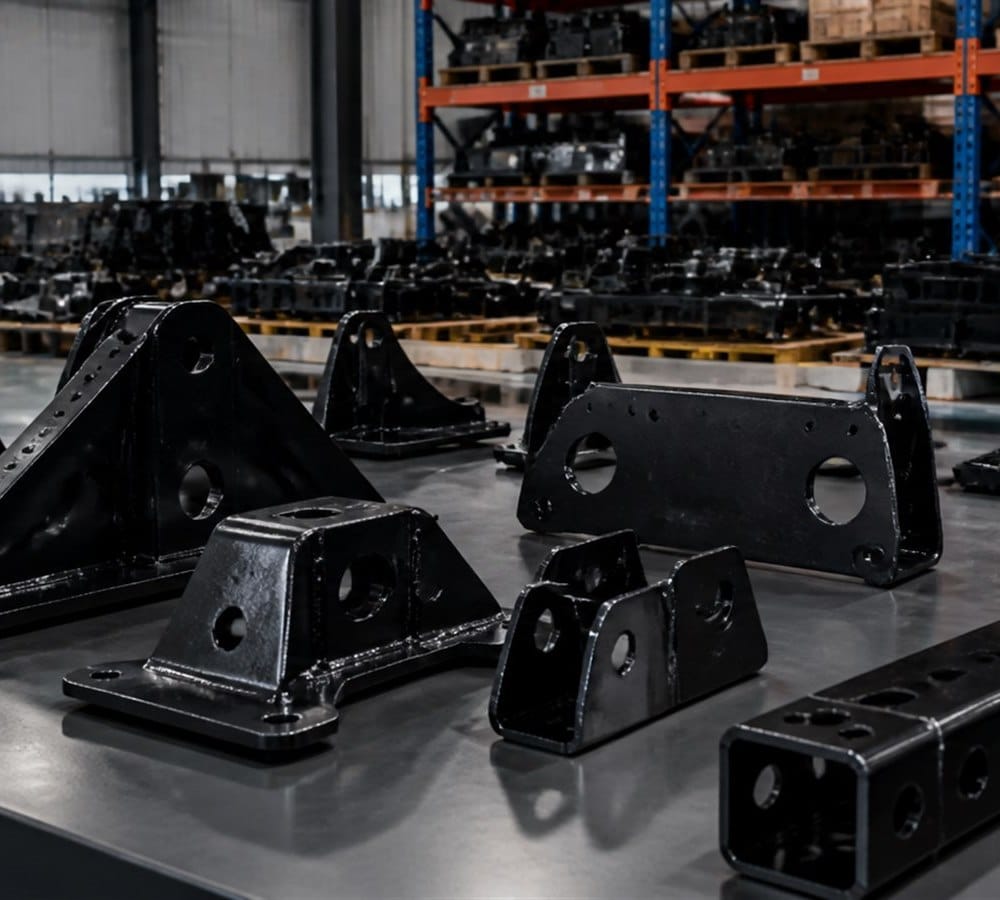
Before checking individual parts, identify the truck itself as accurately as possible.
Useful information can include:
manufacturer, vehicle series, model, production configuration, VIN, and existing component markings.
Before checking individual parts, identify the truck itself as accurately as possible. Useful information can include the manufacturer, vehicle series, model, production configuration, VIN, and existing component markings.
A Vehicle Identification Number (VIN) is a standardized vehicle identifier that can contain information related to the manufacturer, vehicle characteristics, model details, and production identification. For heavy truck parts matching, VIN information should be combined with the truck model, OEM number, installation position, and physical component details to improve identification accuracy.
For truck parts matching, a VIN should be combined with the manufacturer’s own model and component information rather than treated as the only identification method.
This is especially useful when working across different international truck platforms.
Check Installation Position Carefully
One of the most common causes of incorrect component selection is overlooking installation position.
Many heavy truck parts have position-specific versions.
Examples include:
front left
front right
rear left
rear right
upper mounting
lower mounting
A bracket designed for the left side may use mirrored geometry compared with the right-side component.
The same principle applies to components installed at different heights or structural locations.
Before selecting a replacement, technicians should photograph the original installation area and record exactly where the component is mounted.
This provides useful reference information when comparing replacement parts.
Measure Mounting Points, Not Just Overall Size
Overall length and width are useful measurements, but they are often not enough.
For structural and mounting components, the most important dimensions are frequently related to connection points.
These can include:
- hole diameter
- center-to-center hole spacing
- mounting face dimensions
- bend angles
- component thickness
- connection height
- relative position of mounting surfaces
Two brackets can share similar external dimensions while using completely different mounting arrangements.
Detailed measurements become especially valuable when an OEM number cannot be found or when the original component has been used for a long period.
Material and Manufacturing Method Matter
Heavy truck components can be produced through different manufacturing processes depending on their function and design.
Examples include:
casting, forming, machining, welding, and combinations of several processes.
A cast aluminum bracket, fabricated steel bracket, and formed structural component may perform different roles even if their basic shape appears similar.
Manufacturing method affects geometry, reinforcement features, surface structure, and connection design.
When evaluating replacement Heavy Truck Parts, material and manufacturing method should therefore be considered alongside dimensional compatibility.
Replacement Parts Should Match the Surrounding Assembly
A component does not function independently from the rest of the truck.
A headlight bracket interacts with the lamp and surrounding body panels. A hydraulic lock bracket interacts with the cab locking mechanism. A suspension bracket connects to other suspension components. A cross beam connects structural sections.
This means replacement work should always include an inspection of nearby parts.
If the original component was damaged by impact, vibration, excessive movement, or another mechanical problem, surrounding connections may also have been affected.
Checking the complete assembly helps avoid installing a correctly matched component onto an already misaligned structure.
When Custom Components May Be Needed
Most replacement work should begin by identifying the correct standard component for the vehicle.
However, custom components may be required for modified trucks, specialized assemblies, discontinued configurations, or applications where a standard component does not match the existing structure.
In these situations, technical information becomes particularly important.
Useful documentation can include:
drawings, physical samples, photographs, mounting dimensions, material requirements, connection points, and application information.
A custom truck component should be developed from technical requirements rather than from appearance alone.
The more accurately the original structure is documented, the easier it becomes to reproduce the required geometry and mounting relationship.
Building a Better Heavy Truck Parts Identification Process
A repeatable identification method can make truck parts matching much more efficient.
A practical sequence is:
Truck brand → vehicle model → OEM number → installation position → photographs → dimensions → material → compatibility confirmation.
This process works particularly well for brackets and structural parts because many variations may exist within the same general product category.
Keeping clear records also helps when the same truck model requires similar components again in the future.
Photographs, part numbers, dimensions, and vehicle information can gradually form a useful internal reference library.
Common Mistakes When Selecting Heavy Truck Parts
Several mistakes can make component matching more difficult.
The first is selecting a part only by appearance. Similar-looking brackets may have different mounting geometry.
The second is ignoring left- and right-side configurations.
The third is providing only a general truck model without the original component number or installation position.
Another common issue is measuring a damaged component without considering deformation. If a bracket has been bent, its current dimensions may no longer represent the original geometry.
Finally, surrounding components should not be ignored. Damage in one structural area can affect several connected parts.
A careful identification process reduces these uncertainties before installation begins.
Conclusion
Heavy Truck Parts include much more than major mechanical assemblies. Fender brackets, headlight brackets, cross beams, hydraulic lock brackets, cab suspension components, stabilizer bars, protective structures, and aluminum mounting parts all contribute to the correct operation and structural arrangement of commercial trucks.
Reliable replacement begins with accurate identification.
Vehicle model, OEM number, installation position, material, mounting dimensions, photographs, and surrounding components should all be considered before selecting a part.
For Sinotruk, FAW Jiefang, Shaanxi Auto, and other heavy truck platforms, a structured matching process makes it easier to distinguish between similar components and identify the correct configuration for each application.
FAQ
What information is needed to identify Heavy Truck Parts?
Useful information includes the truck manufacturer, model, OEM or reference number, installation position, photographs, component material, and key mounting dimensions. Providing several types of information together is more reliable than identifying a component only by its appearance.
Why can similar-looking truck brackets have different applications?
Truck brackets may use different mounting-hole positions, bend angles, dimensions, materials, or left- and right-side configurations. Even small differences can affect alignment with surrounding parts, so vehicle model and installation position should always be checked.
What types of structural truck parts commonly require careful fitment?
Fender brackets, headlight brackets, cab suspension brackets, hydraulic lock brackets, cross beams, stabilizer components, protective bars, and other chassis or body mounting parts all require accurate fitment because they connect directly with surrounding assemblies.
Can an OEM number identify a truck part by itself?
An OEM number is an important reference, but it should ideally be verified together with the truck model, installation location, and physical characteristics of the original component. This helps distinguish between related variants used across different vehicle configurations.
When should a custom heavy truck component be considered?
A custom component may be appropriate when a standard part does not match a modified vehicle, specialized assembly, discontinued configuration, or unique mounting requirement. Drawings, samples, dimensions, materials, and installation details should be provided before the component is developed.
Need Help Matching Heavy Truck Parts?
When identifying structural brackets, aluminum components, cross beams, suspension-related parts, or other heavy truck components, prepare the vehicle model, OEM number, installation position, photographs, and available dimensions before technical confirmation. You can provide these details through Leiying’s Contact Us page to help clarify the required component and application.